Press
What the media are saying...
“In his early career, he proved himself to be one of the very finest interpreters of that tradition Australia has ever produced. As time went on, he also demonstrated a rare ability as a songwriter. Indeed, although some commentators have described him as an Australian ‘Bob Dylan’ or ‘Johnny Cash’, in my opinion his work more closely resembles that of the great Texan songwriter, Guy Clark and that of his Canadian counterpart, Gordon Lightfoot. All three men’s work is also firmly grounded in a highly developed sense of place. With Shearston that place is the area in rural New South Wales where he grew up. With Clark, that ‘place’ frequently was the semi-rural small town Texas in which he grew up. In a similar way, Lightfoot’s songs frequently refer to the area around the town of Orillia in Ontario, Canada which was his birthplace. There is also a strong historical sense in all of their work, with many of Gary Shearston’s songs reflecting his deep knowledge of, and interest in, Australian culture and traditions. It is in this company of the very finest craftsmen songwriters that his superb body of work deserves, in my opinion, to be considered.”
(Andrew Shields, Toppermost)
Thanks for involving me in such a magical event!
(Jon Wolfe)
Thank you very much for letting us know about the day – and obviously a lot of people feel the same way – was great to see so many there. And we found it so interesting to hear about Gary’s life and music – some of which we knew and a lot that we didn’t know. What a complex man he was. Judging from what we heard from people there (I always watch and listen for audience reaction) there are a lot of people who love his music and will go on doing so.
(Glenys & Johnny, OPus Music Country Radio Network)
Greeting from Walton on Thames, I hope you all have a great day celebrating the life and work of GS. I was an aspiring teenage musician when “i get a kick” was a UK hit. It evokes many happy memories. I somehow managed to eke a living of sorts from music as a drummer. I’ve since tried my hand as a singer/guitarist. “Kick” is a very difficult song to sing and play at the same time. Gary did it justice. Best Grooves to you guys.
(Stan Sheppard, UK)
Sounds like a great way to remember Gary, love to be there.
(David Milne, 95.3 Huon FM)
I wish I could be there. I knew Gary from Troubadour days, and used him on ABC TV and 2GB radio. He was a good friend!
(Bev Gledhill)
Gary was an extraordinary man. He had a wonderful ability, a music legacy left behind.
(Raymond Phillips, Country Harvest programs, KRR 94.5FM)
There’s another event scheduled for Sydney on Sunday, August 18 from 4pm at Petersham Bowling Club, A Celebration of the Musical Life of Gary Shearston. Heading the all-star cast is Pat Drummond, Warren Fahey, Mic Conway and Jim Low. Tamworth’s Jon Wolfe and Sydney radio presenter Barbara Morison will deliver spoken tributes to the iconic Aussie who left a huge impression on so many fans over the decades.
(Anna Rose, Northern Daily Leader)
It was sad to hear the devastating news of Gary's passing. He left us too soon. You always think a person will be around forever but then I guess he will be in his songs. I'm so pleased I wrote the song Folksinger for him and that he got to hear it. (It was on my independent CD, Above the Creek Bed). I think he was very proud that someone had written and recorded a song about him.
(Jim Low)
I have only just heard the news about Gary. What an absolute tragedy for Aussie music.
(Warren Fuller, 2NUR)
Obituary (The Guardian UK)
Australian singer Gary Shearston was signed to Charisma Records and recorded his best-known album, Dingo, in 1974.
In the 1960s, the Australian singer-songwriter Gary Shearston, who has died after a stroke aged 74, recorded a run of highly regarded and influential albums mixing his original compositions and Australian folk tunes, and became known as the "Aussie Dylan". One of his songs, Sometime Lovin', became a hit for Peter, Paul and Mary; and in 1974 Gary had a worldwide hit with his cover version of Cole Porter's I Get a Kick Out of You (arranged by Jim Parker).
Gary was born in Inverell, New South Wales. When his father was away serving in the Second World War, he lived for a while with his mother and grandparents in Tenterfield, in a house that Gary later bought and lived in until his death. After stints as a journalist, a puppeteer and a kids' TV presenter, he began writing and singing songs on the Sydney folk scene in the early 60s.
He signed a contract with Warners in 1968, at exactly the same time as Van Morrison; recently, Gary contributed to my book on Morrison, Hymns to the Silence (2010), discussing life, music and matters arising, and it was my good luck to remain in regular contact with him over the years. A move to New York at the end of the 60s was marred for Gary when US immigration refused him a work permit because of his anti-Vietnam and pro-Aboriginal activities in Australia; and although he recorded an album for Warners, it was never issued.
He relocated to London and was signed to Charisma Records by Tony Stratton-Smith, recording his best-known album, Dingo (1974), which included I Get a Kick Out of You, a No 7 hit in the UK. Diminishing commercial returns saw him back in Australia by the mid-80s, recording songs such as the cherishable, cinematic memoir of a bush childhood Shopping on a Saturday, and writing an Aussie epic novel, Balkenna (1989).
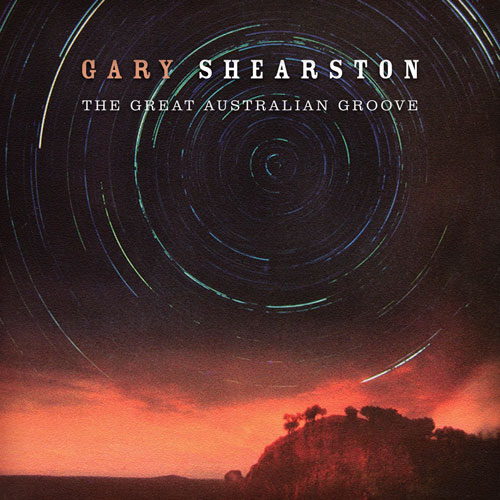
He was still in demand on the folk circuit and combined playing and recording with duties as an Anglican minister in the area where he grew up, having been ordained in 1992. After he retired from the church in 2007, there came a late rush of writing, and he issued more than 100 songs in the last five years of his life, his final album (of 14) being The Great Australian Groove (2012).
Gary believed in the social and redemptive power of song, and he also knew a good tune when he heard it. His lyrics were literate, sometimes didactic but more often witty and wise, and his vocal was characterised by warm, unmistakably Aussie vowels. The DJ John Peel, a fan, noted that he could "sense the heat and wild friendliness of Australia" in Gary's voice.
He is survived by his wife, Karen, and children, Bonnie and Luke, all of whom he celebrated in song.
(Peter Mills, story link)
'Folk Legend Defined Nation's Identity'
Sydney Morning Herald Obituary (PDF Format)
'The Great Australian Groove'
Aus Options Review (PDF Format)
“With its unexpected twists and turns, Gary Shearston's intriguing life story, would make the ideal basis for a riveting movie.
Shearston, a key figure in the folk movement of the 1960's, played numerous gigs, signed to a major label, appeared on TV and had a song covered by Peter, Paul and Mary.
He also braved death threats and missed out on a chance to work in the US due to certain individuals and authorities objecting to his gutsy and heartfelt political activism.
In addition to all this drama he released a chart-topping hit in the UK in 1974, influenced a multitude of Aussie roots musicians and even became an Anglican minister!
Hollywood, are reading this?
On his latest album, an eighteen-track behemoth called The Great Australian Groove, Shearston shows that the fire still burns in his belly.
On the rousing In All Humility, for instance, he proclaims, "Racialism ain't the vision for the future! If it is, there isn't one." Shearston, however, is not simply protesting here against something that he abhors.
Instead he offers an alternative vision for the future which is clearly based upon his faith that unity rather than dissension is possible: "One humankind/One planet, Earth/Love and respect/For all your worth/ In all humility." Musical highlights include the haunting atmosphere of Heading Home which features beautiful backing vocals by Penny Davies and the richly textured chiming Byrdsian guitar that shines on songs such as In All Humility and There Came A Criminal.
The Great Australian Groove is an excellent addition to this legendary Australian musician's catalogue of seminal and influential work.”
(Graham Blackley, Trad & Now)
“Australian singer Goyte has recently won a Grammy award for his pleasant but unremarkable global pop song hit. At the same time, Australian singer songwriter John Williamson rightly complained about the influence of the Nashville type music scene here. In contrast, this album of 18 songs looks deeply and at times wittily at personal and political issues in our culture.
As with his three other albums of original songs released this century, Gary Shearston covers the meaning of love/ solidarity and the need for equality and a vision for our society. On the former issue, songs like, What Is Love? and Need Me Some Love stand out, with Phantoms of Night a penetrating song about dreaming. Moreover, the complexity of relationships in his own family background is explored in From Goodness Knows Where, which even on a second or third listening retains its dramatic tension.
At the societal level, songs such as Frost Across the Tablelands, Strangers and In All Humility call for valuessuch as optimism, altruism, sharing the fruits of the land and peace in strong lyrics as against the evils of narcissism,racism, greed and extreme nationalism. Shearston is a fine exponent of the historical ballad and this is borne out in When The Push Came To Shove, about the Sydney Push of the late fifties and sixties, of which he was a participant. Here he calls out for a new vision for Australia and is really talking about the need for a values revolution.
While there are no instant solutions, Shearston sees hope in some Australians' ability and determination to the tackle big and small issues of life they find before them in the title track, The Great Australian Groove.” (Jack Humphrys, Australian Options, Autumn 2013)
“Gary Shearston has been writing and singing his and other people’s songs for a long time, and he seems to be better with each new release. This is a very well composed, performed and produced CD for lovers of good music.”
(Paul Rowe, Country Music Capital News, May 2013).
Gary will be a priority artist in my program.
(Raymond Phillips, Country Harvest)
“If Judith Durham is the Queen of Australian folk then Gary Shearston must surely be the King.”
(Graeme Gilbert, 2SM Super Radio Network)
The Groove has landed. Thanks very much for it. I'm playing it now and it sounds pretty fine! By the way j'adore the cover art! Superb and totally harmonious with the mood or do I mean groove of the record. Congratulations on the album.
(Dr Peter Mills, Senior Lecturer in Media and Popular Culture at Leeds Metropolitan University in England, UK)
‘Renegade’
The word “legend” is used freely in the music world, but few could be more entitled to its use than Gary Shearston. “Renegade” is living proof you can reach your seventies, spend your entire adult life in music, and still have a voice, something to say, and the determination to say (or rather, sing) it! Get your hands on this album and find out for yourself!
(Ian Dearden, Trad & Now, May 2012)
Trad & Now Review (PDF Format)
Northern Daily Leader Review (PDF Format)
“In the past decade, we’ve been fortunate to have several releases from Gary Shearston.
Each is filled with songs that feed the soul, challenge the mind and do the heart all power of good.
God bless Gary Shearston. He most certainly has.”
(Anna Rose, Northern Daily Leader, September 2011)
“I wanted to say thank you for Gary's album, what a songwriter! I have played it on the show.”
(Felicity Urquhart, ABC Saturday Night Country)
Perhaps it’s got something to do with the ‘End Of The World’ predictions spawned by The Mayans; or the ‘End Of The CMAA’ predictions generated by the confusion surrounding last year’s Golden Guitar Awards. Either way, it seems that every album I’ve listened to recently has featured an Artist who has been picking over their past. Even the late Carl Jung would have been vastly impressed with the synchronicity of Country Music’s current collective obsession with its own creative history.
Most singers seem to be dealing with this retrospective urge by recording ‘covers’ of their favourite childhood country hits. Australia’s Gary Shearston, however, has done something far more artistic and individual by releasing his new CD of original songs, ‘Renegade (Rouseabout Records - Undercover Music). This is a work which deals, often powerfully with his own somewhat turbulent history, his early influences and his hopes for the future. It is a heartening development from a man who was one of the seminal influences in the development of Australian Country/ Folk.
For those who have been living in a parallel universe (or watching CMC); and are inexplicably ignorant of Shearston’s career, a little backtracking may be in order.
Gary Shearston was raised in Tenterfield, NSW. When he was 12 years of age his family moved to Sydney where, after leaving school, he went on to work as a journalist. His childhood experience of life in the bush, however, would develop as one of the dominant influences in his writing. ’Live In Love’, from the new album, cascades with poetic images which celebrate the beauty of the natural landscape and the sheer joy of being alive to witness it.
In the late 1950s, at a time when most Australian Folk Singers were performing their repertoires in unnaturally broad Irish accents; when Rock‘n Roll and Country Singers mimicked a ridiculously ‘Overblown Texan Tone’ and when even many of The Bush Balladeers in Country Music were trying to sound more like ‘The Singing Brakeman’ than Australian Bushmen, Gary pioneered a style that somehow managed to drag the Australian Accent, kicking and screaming, into the light of popular music.
It is no exaggeration to say that without his influence the musical culture which spawned and supported the rise of The Bushwackers, Redgum and John Williamson would probably never have existed.
By 1962 Gary was living in Kings Cross and had fallen under the influence of The Sydney Bush Music Club. He was already performing Australian classics, in between his more accessible material, when the ‘folk boom’ of the early 1960’s hit. One of the 'standouts' on Shearston’s new CD acknowledges the friendship and influence, at that time, of the great collector and archivist, Edgar Waters.
Many people in Folk and Country Music (who regularly sing them now) are often unaware of how close to oblivion, songs such as the Rybuck Shearer and Lachlan Tigers actually came. A great debt is owed to the efforts of archivists and historians such as A.L. Lloyd, Duke Triton, Edgar Waters and Eric Watson, who collected and preserved Australia’s Musical Heritage.
Shearston quickly became a regular performer on TV and in Sydney Clubs, and was invited to open The Troubadour Folk Club at the insistence of Brother John Sellers, the American Bluesman who was performing here at the time.
By the time Gary was signed to CBS, in 1963, his work as a songwriter had also become increasingly recognised. ‘Australian Broadside’, featuring ‘Sydney Town’, cemented his position as one of Australian Music’s leading voices.
His classic, ‘Sometime Lovin'’ became a world-wide hit when it was recorded by Peter, Paul and Mary on their LP, ‘Album’, in 1965. Like Bob Dylan, John Denver and Gordon Lightfoot, whose careers were also launched when their work was showcased by that iconic folk trio, Shearston’s star was rising rapidly in the international arena.
But there was another side to Gary Shearston, and it was one which would inevitably lead to both his finest moments and his greatest challenges. Gary, who had been raised a Christian; was a committed activist. In addition, he was a man whose belief in the redemptive power of song led him to begin writing material which openly targeted some of the more contentious Inequalities and injustices of the day.
His stances on Australia’s involvement in the Vietnam War and on Australian Settler Culture’s treatment of our Indigenous people were set to put him in conflict with many of those who, at the time, controlled the Recording and Media Markets. It even led to death threats against him.
One night, at a packed concert at The Sydney Town Hall, Shearston was warned by Police that they had received credible information that there might be an attempt to assassinate him on-stage and, since they could not guarantee his safety, he should cancel his appearance.
Shearston refused to be silenced by such threats of violence. The courage it must have taken to step unprotected into that spotlight; to perform passionately and to speak clearly and uncompromisingly of his beliefs was an enormous inspiration to anyone who witnessed it.
In the wake of PP&M’s cover of his song, Gary travelled to the USA and was invited to record with Warner Bros. But, even as he prepared to leave Australia in 1967 his file was being passed by ASIO to US authorities. Consequently, even despite a ‘Letter of Good Character’ written by Edward Kennedy, he was refused a Greencard. Reactionary forces had, it seemed, conspired to silence him again and Shearston was effectively blacklisted and forbidden to perform; suffering the same fate as The Weavers and many other heroes of The Anti-War Music Movement.
It was a devastating reversal. His career nose-dived. His song ‘The Truth Is’ on the new album 'Renegade' deals with this period.
Echoes of futility in the face of adversity feature poignantly in other songs on the new CD. 'The Butcher Bird' is a very powerful piece that covers the final moments of a man who is ‘Crushed by The Ways of the World’. While the song, which is one of two that relates to a friend known only as ‘the Afrilalian’, is by no means autobiographical; the incredible empathy Shearston displays in this piece reveals that he is certainly no stranger to the 'slings and arrows' of depression.
Shearston’s determination however, was his personal strength. For him, there was always ‘Tomorrow’. In early 1972, he left the USA for England. It was to be here that he would re-ignite his career. In an appropriately ironic twist, and one which exacted more than a little cultural revenge, he skyrocketed to the top of the English Charts in 1974, with a quirky version of Col Porter’s American Classic, “I Get a Kick Out Of You”.
It was delivered in a deadpan and uncompromising Aussie accent; a style that was clearly ‘Broad Aussie’ taking on ‘Broadway’. People loved it!
In time, however, it was to be the resurgence of Gary’s Christian Faith, in the following decade, that would reset the course of his career and lead him back to the country of his birth. During the late 1980’s, while still recording and performing, he felt increasingly drawn to pursue a religious vocation. Shearston was ordained an Anglican minister in July 1992.
Great stories, like great songs, often run in circles. Eventually, after serving congregations in Deniliquin, Hay and Bangalow, Gary returned to his home town of Tenterfield where he and his wife, Karen, purchased the very house in which Gary had lived as a child. Shearston retired from full time Parish Ministry in 2003 and it is noteworthy that he delivers some fairly strident criticism of the attitudes of The Anglican Hierarchy in the new song, ‘A Change Of Circumstance’. I suppose ‘Renegades’ were never expected to retire quietly.
Shearston’s latest offering, which features his son, Luke, on drums has been superbly engineered by Roger Illott at Restless Studios, in Stanthorpe. In many ways it represents the completion of a circle; but it is also clearly the beginning of a new and exciting musical chapter in the life of a man who is rightly acknowledged as an Australian Music Legend.
Gary Shearston’s New CD is released through Rouseabout and Distributed by MGM and is also available at www.garyshearston.com.
(Pat Drummond, Country Update)
"Gary Shearston is described as the DOYEN of Australian folkies, Gary is more than that he is Royalty in our Australian Music Industry.
The lyrics in each of the sixteen songs released on 'Renegade' are true to their words. With each song keeping me interested from start to finish... to set one song apart would be an injustice to the other songs.
Anyone looking for true grit in lyrics then look no further, Gary Shearston's Renegade is the one you won't be disappointed."
(Raymond Phillips, Country Harvest)
“Many thanks for the CD which we have added to the playlist. Very different from his previous albums, which shows there is plenty left in the talent of the man.”
(David Long, Folk Show, Radio Adelaide)
“From the opening track ‘Live In Love’ to the closing track and album title ‘Renegade’ this album’s brilliant, kept my full attention and give Gary his due, he’s a wonderful songwriter and lyricist covering a fascinating range of topics. If Australian folk has passed, well long live Gary Shearston.”
(David Turner, Capital News, May 2011)
Country Music Capital News Review (PDF Format)
WOW!! The album arrived just now - I'm only up to track 3 but already I am so impressed! I have added 'Truth Is' straight into Friday's playlist already and will choose another one as well! Please pass on our congratulations to Gary on 'Renegade'.
(Glenys & Johnny Marcus, 2CCR)
“Respecting and recognizing Elders, who have made a significant contribution in any field is important and certainly Gary Shearston falls into this category. He is an icon of Australian folk.”
(Jack Humphrys, Australian Options)
“Gary Shearston was to folk what Johnny O’Keefe was to rock”
(Monica, 2BL listener on Richard Glover’s Sydney afternoon show during 2010 on air interview/live performance).
Sadly Johnny O’Keefe has been dead for over 30 years, but Gary Shearston, keeps turning out entertaining and educative music at regular intervals. This 16 track CD is no exception, as he continues the theme of recent releases, proclaiming the universal values of love, peace with justice, righteousness and a less stressed and simpler lifestyle as relayed in the song Say ‘Yeah’.
The ‘renegade’ theme is evident in three songs- the troubling Truth Is, About The Situation and the title track Renegade. In the 1960s, Shearston sided artistically and politically with the anti-Vietnam war, Aboriginal rights and nuclear disarmament movements. Some great songs emerged from his engagement with these issues. However Australia’s political police ASIO took a predictably different view with the Cold War still in full swing. Their activity saw him sacked from a TV show, blacklisted from the industry and a promising career in the US was thwarted. In recent years as a Minister in the Anglican Church his independent thinking and voice did not sit well with the church hierarchy.
Now days it is writing and singing songs about the wrongs committed by the rich and powerful on the poor that is a priority. However, he is no propagandist or pure ‘Australiana’ exponent, although as others have noted there is plenty of Australian imagery in Live in Love and the fine song And a Butcherbird Overhead Sang about a bush suicide. Similarly She’s a Classic, a delightfully irreverent song about Australian bloke’s hyperbolic descriptions of women, utes or racehorses, has this element too. For Shearston’s song writing also has a universal approach too as shown with the wonderfully wise and optimistic A Change of Circumstance and his tribute song to the painter Martin Sharp, Paint Me a Painting, Painter.
Hopefully, broad ‘programming ears’ in all aspects of radio will expose Renegade to a wider public."
Jack Humphrys, Australian Options, Autumn 2011
"Renegade is acclaimed Australian singer-songwriter Gary Shearston’s latest CD. We are treated to sixteen, newly recorded songs.
While listening to the CD a couple of days ago, a kookaburra began a rather raucous, accompanying cackle. I interpreted this enthusiastic response as an authoritative endorsement of the definite, Australian sound of the songs and also of their quality. And with continued listens, I haven’t changed my mind. I can’t speak for the kookaburra, however!
Unique images from the Australian landscape accompany the simple affirmation in the opening song title to live in love.
The songs Truth Is and About the Situation, both set to traditional tunes, provide some interesting background information regarding the path Gary has travelled both musically and in his search for the things he believes and values. His skillfully constructed lyrics recount his side of things. You don’t pass lightly over images of church leaders likened to “sideshow alley spielers”. These songs also help to explain the CD title.
His Name Was Edgar Waters is set to the traditional tune used for the song My Name is Edward Kelly. Gary sang the Kelly song on the LP Bolters, Bushrangers and Duffers which was released in late 1965. The very comprehensive notes for this record were written by Waters. Waters also wrote the album notes for another two of Gary’s early CBS recordings, Australian Broadside and The Springtime It Brings on the Shearing. Gary’s song about his friend is a fitting acknowledgment of the important role Edgar Waters played in the revival of Australian folk music and song.
The song Paint Me A Painting, Painter is another dedication to a friend, the Sydney artist Martin Sharp, It celebrates both the creative process and friendship. The simple detail in the descriptions of Sharp at work reinforce Gary’s admiration for and the value placed on his friend’s creative output. The tune that accompanies this song is a good example of Gary’s ability to compose a strong, memorable melody.
The title song Renegade concludes the CD. If Gary regards himself as a renegade it’s probably because he has always been ready to stand up and say what he believes, despite the consequences. As he declares in the chorus of this song:
“I’m still ready willing and able
To lay all my cards on the table
And call a spade a spade.”
He has already confessed the following in Truth Is:
“I just celebrated, as conscience dictated,
Good causes I could help with a song.”
There is no evidence that I can see in any of the songs, of nostalgia for a world now passed, as one reviewer recently claimed. There are songs that engage and encourage us to value good memories, try and understand the past and possibly learn from the mistakes of the past. These are the “seeds” spoken about in the opening track, the wisdom that comes from a lifetime of experience.
The musical arrangements differ from the more sparsely sounding The Best of All Trades, Gary’s last double CD release. On Renegade you will hear the drumming talents of Gary’s son Luke on every track. Roger Ilott sensitively plays a wide selection of electric and acoustic stringed instruments as well as keyboards. Lee Williams contributes bass guitar on all tracks and tasteful electric and acoustic guitar on three. Penny Davies and Roger Ilott enhance a number of the songs with backing vocals, while their son Jordan plays dobro on a song. The rich sound created by all these capable musicians gives an edge to many of the songs. Thankfully at no time does the instrumentation drown out Gary’s strong and, for many of us, pleasantly familiar vocals.
Let’s hope that Gary Shearston continues to write and sing his songs and “keep tabs on all the wrongs” for many years to come.
Congratulations to Rouseabout Records for their continuing support of fine Australian music."
Jim Low, Simply Australia, April 2011
Sydney Morning Herald, Spectrum Review (PDF Format)
“This new collection of songs by the doyen of Australian folkies will not disappoint. Here are marvellous songs about Shearston’s trouble-laden career (Truth Is), his deep affection for the artist Martin Sharp (Paint Me A Painting, Painter) and the great writer and folklorist Edgar Waters (His Name Was Edgar Waters), all sung with Shearston’s distinctive delivery and saturated with Australian imagery. Shearston is a genuinely great songwriter. Anyone who can write something as persuasive as And a Butcherbird Overhead Sang, a very Australian song about suicide, is a national treasure.”
Bruce Elder, SMH, February 2011
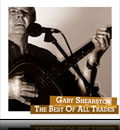
‘The Best Of All Trades’
Country Music Capital News Review (PDF Format)
“Gary Shearston was to folk what Johnny O’Keefe was to rock.”
Monica, 2BL listener
". . .it's a strong and beautiful thing, and several of the songs on there are already among my favourite Gary Shearston tunes, which is really saying something, as the old song would have it."
Dr Peter Mills, Senior Lecturer in Media and Popular Culture at Leeds Metropolitan University in England
“This iconic Australian folk singer-songwriter is most definitely at the top of this game if this new double album is any yardstick. There’s a whopping 24 songs on this value-packed offering from one of Australia’s most eminent folk icons. If it wasn’t for Gary Shearston and a few other like-minded souls back in the ‘60s, there may not have been a folk music industry in Australia today. A big statement – but do your research. You’ll find it’s not far from the mark.
Any Gary Shearston collection is bound to be not only tales from the prolific pen of this fine writer, but also stories of Australia and its history – and those who make Australia’s story what it is. ‘Hey, Charlie Perkins’ is another tip of the hat to one of this country’s most enigmatic characters. Gary’s own story is told at the beginning of this album with his opener ‘Another Song’. It tells of the struggle he had to gain an entry visa to the United States of America in the ‘60s, when, because of his strong political views, he was labeled an “undesirable alien”. Although he was barred entry for many years he still had the last laugh. Gary Shearston is here with us decades later – to sing yet another song – and ironically, his music is possibly better received in the US and UK than it is in his homeland.”
(Anna Rose, The Northern Daily Leader, October 2009).
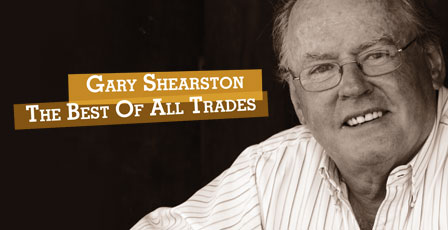
Gary Shearston has been there with the world-wide hit of his version of COLE PORTER’S I Get A Kick Out Of You. These days his ecclesiastic-driven rustic lifestyle is a little at odds with the sophistication of Porter’s music, but then that was the point. The folkie in Gary has always been tempered by an embrace of the unfamiliar and on his gargantuan new 24 track, two CD release The Best Of All Trades (Rouseabout) he runs amok on themes of love for people and the land. By land I mean the planet. Gary is all inclusive as his words We Are Australia over a very familiar traditional melody ably demonstrate. There are many other examples. Shearston’s palpable affection for a flawed humanity is given full rein. Witness The Harmonica Man or Hey, Charlie Perkins. The surprising aspect is the bluesy edge to quite a few of the songs. The juxtaposition with Shearston’s wide open fog horn style of singing is quite appealing and JOHN WILLIAMSON take note, da blues does have a place in ‘Oztrailian’ music. In fact it just might be the bluest continent of all. The production by ROGER ILOTT has been kept spare. Just sometimes I wished for more musical ‘kick’ but Gary has here a document that should finally place him in the pantheon of our greatest song commentators. (Keith Glass, Capital News, August 2009)
Gary Shearston turned 70 earlier this year. He is, therefore, entitled to become a "grumpy old man" who, with great affection remembers his old radical friends ("A Song for John Baker", "Hey, Charlie Perkins") and his childhood ("Tenterfield"); is still concerned with the social and political issues of the 1960s (peace, reconciliation between the world's major religions, unionism); and who, with great effect, rails against the absurdities and excesses of the modern world ("A New Way of Life"). He does this all with his distinctive and intensely Australian vocal style setting this collection of 24 new songs against a wonderfully rich backdrop of acoustic, slide and electric guitars. Shearston has always been an authentic rural Australian performer with a flat, overtly nasal, vocal delivery and a unique ability to capture the essence of rural Australia in a few, brilliantly evocative words. In many ways this is an album of nostalgia for a simpler, more spiritual and more socially committed Australia. "Let me know when hope is in your world again," he sings at one point. What makes it remarkable is that Shearston's song writing and musical abilities have not been blunted by either age or his long stint as an Anglican clergyman. (Bruce Elder, SMH, July 2009)
All that remains for this renowned and enduring songman is to take his work on a national tour again. (Australian Options Winter 2009)
The last studio recordings made by Australian singer-songwriter Gary Shearston came out in 2001. In 2007 a selection of Gary's recorded work was released in recognition of his valuable contribution to Australian music. Now Rouseabout Records, also responsible for these previously mentioned CDs, has released a new collection of Gary's songs on two CDs. For those who have followed Gary's musical career, this has to be very exciting news. For others, it's a great chance to become familiar with the talents of an exceptional Australian songwriter.
In this song collection Gary includes new recordings of Pilgrim Man and Salvation Blues, renaming the latter Deliverance Blue. These two songs were included on his 1989 Aussie Blue album and they are full of wonderful Australian images.
The twenty four song collection begins with the blues song Another Song. It tells of Gary's disappointment when American authorities at first denied him the right to perform in America, after he left Australia in the mid 1960s to pursue his music career overseas. Although the song has a somewhat world-weary feel to it, it also possesses a very positive attitude to the whole sorry affair.
In his song writing, Gary has never shied away from the many problems that face our world. So songs like Peace Be With You, The Thorns Are Covered With Roses and A New Way of Life, with their confronting litany of frustration, avoid conclusions of despair. Instead, like another song Millennium, they find things to celebrate in life and place great value in the human potential to continue striving for ideals.
Tenterfield is a beautiful, heart-felt homage to the town where Gary spent much of his childhood and now resides. In a song like this you quickly become aware of his ability to capture the setting for events and so allow us to appreciate some sense of place.
On That Sea Which Has No End is a powerful song that laments the violent death of a friend. With just enough detail, Gary relates a story of tragedy that immediately captures the attention of the listener. I was left wondering whether the friend was present during the events related in the song Crafty Old Captain which was included on the Aussie Blue CD. I contacted Gary and he told me that, yes, his friend was one of the two sailors mentioned who kept watch and was responsible for getting their vessel safely to shore.
The poignancy of The Norwich Bells is another example of Gary's ability to tell a story in song and gain attention from the start. The delicate beauty of the melody further contributes to making this a very emotional journey. The song faithfully documents the human condition when it is in a most vulnerable state. Achieving this with such sensitivity and compassion is, in my opinion, the mark of a truly accomplished songwriter.
The song Sea Kings relates the tragic loss of life of Australian Navy personnel while assisting in relief operations on the Indonesian earthquake-ravaged island of Nias in 2005. Without in any way dishonouring the memory of the men and women who lost their lives, Gary makes a comment in the chorus about the perversity of war and the preparations for it.
This tragedy, he says:
" ... helped us forget for a while
That we made you for war,
Which we've learned to our cost
We should study no more."
The song reminds me of his 1960s song The Voyager about another fatal, peacetime accident. This song also contains a similar warning. ("Ships must sail the seas for peace before another dies.")
Some of the songs have already enjoyed a life, long before these recordings were made. I first remember hearing an emotive performance of When The Cross Turns Over on the ABC Australian Story programme in 1996. I heard Gary sing his fine tribute to Richard Brooks, The Harmonica Man, at a Sydney performance in 2004. Brooks performed on most of Gary's seminal 1960s CBS recordings. His memorable, tasteful and expressive harmonica playing was an integral part of these recordings.
There are other stirring songs of tribute, memory and celebration including Hey, Charlie Perkins and A Song for John Baker, a close friend of many years. There is also a delightful song about his young son with which all fathers are bound to empathise.
In his production of these recordings, Gary has set the songs in a rather sparse, musical landscape with minimum accompaniment. This allows his warm, distinctive, Australian voice to be prominent. It also gives the songs an engaging intimacy, reminiscent of his early recordings, as well as a fresh energy that is often only achieved in live performance.
Special mention should be made of David Hume's very fine acoustic, slide and electric guitar playing which enhances each song. The valuable contribution of Roger Ilott and Penny Davies deserves a worthy mention, not forgetting that the songs were recorded at their Restless Music studio in Stanthorpe, Queensland.
The songs that make up this 2CD set are, as the title song says, definitely "sung from the heart". We live in uncertain times and these are songs of our time. They are honest responses to the world we live in and share. While acknowledging sorrow, tragedy, despair and wrongdoing that form parts of our life experience, these songs celebrate and inspire a real hope for and faith in humanity. Above all, they are characterised by compassion. Let's hope that songwriters like Gary Shearston continue this most valuable trade. Quoting once again from the title song:
"There's always another song still to be sung
It's the best of all trades to make songs
And the second best to sing them."
(Jim Low, Simply Australia, April 2009)
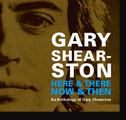
'Here & There, Now & Then'
"Shearston has written and interpreted some beautiful music. This two-CD set looks in all the nooks and crannies of the Shearston story. No gem has been discarded. He also wrote perhaps the smartest Australian song ever, 'Irish Girls Will Steal Your Heart Away'".
(Pete Best, Sunday Herald Sun)
"What a welcome arrival. There has been an undercurrent of demand for Gary Shearston recordings for many years now, rekindled every five or so years by a special recording that reminds us of the special nature
of his songs and arrangements. This is a deserving anthology for one of our musical poets, one who has been very difficult to get, until now."
(Ron Adsett, Capital News, August 2007)
"Gary's influences in the folk and Australian bush music scene came from the times he was living in - the volatile 60s when Aboriginal and Torres Straight Islanders were fighting for equal rights and the right to vote - and when a sector of the community spoke out against Australia’s involvement in the Vietnam War. Gary Shearston was right there in the thick of it, writing songs in support of these causes and speaking out for what he believed in. This outspokenness was a two-edged sword, in that it gave him prominence, but also hindered his chances of obtaining (and maintaining) a visa to live and work in the United States. The Gary Shearston story is one that books could be written of, so in lieu of an epic, feel free to visit his website, www.garyshearston.com or www.undercovermusic.com."
(Anna Rose, Capital News, September, 2007)
"This song collection is a very appropriate reaffirmation of the important contribution Gary has made to the rich tradition of Australian songwriting. The CDs are bursting with musical gems, for Gary's songs possess that special quality which tells you that they will be around for some time to come."
(Jim Low, Trad & Now)
“Gary Shearston was the closest Australia ever came to producing a local version of Bob Dylan. Not only was he an influential singer of traditional folk songs during the 1960s heyday of the folk boom but he was also a hugely gifted songwriter, a radical re-interpreter of the folk tradition (who else thought of using reggae as a backing for Australian songs as early as 1974?) and, if you need any further evidence, had he not been banned from travelling to the United States due to his involvement in the anti-Vietnam movement, he would have ended up being managed by Dylan's manager, Albert Grossman.
Grossman invited Shearston to go to the States. US Immigration locked him out. So Shearston ended up in London in the early 1970s where, signed to Charisma Records (famous for a catalogue which included Genesis and Van Der Graaf Generator) he scored a hit with an unadorned version of Cole Porter's I Get A Kick Out of You.
By any measure Shearston's career has been an enviable journey. From Jim Carter's Troubadour folk club in Sydney to London then back to Australia where, having written a novel, he recorded the remarkable Aussie Blue before joining the Anglican clergy. He preached in both the Riverina and on the North Coast and, at one point, wryly observed that he could now be called "the Reverend Gary Shearston" like the great African-American folk bluesman, the Reverend Gary Davis.
This 42-track double CD has been long overdue. It brings together the essence of Shearston's remarkable career. All the bases are covered. Starting with his haunting and melancholy reading of The Springtime It Brings On The Shearing it includes a range of sublime interpretations of traditional Australian folk songs, all recorded in 1965, before moving effortlessly to sensitive readings of Don Henderson's witty The Basic Wage Dream and Oodgeroo Noonuccal's passionate We Want Freedom. Shearston's early forays into songwriting – Who Can Say? and Don't Wave To Me Too Long – hover somewhere between Dylan and Donovan. They lead, quite naturally, to the extraordinary collection of self-composed songs on his two masterpieces – Dingo and Aussie Blue. Baiame, about an enduring love of Australia, is still one of the great expatriate songs. It floats on an ocean of nostalgic feeling and, quirkily, is backed by a stuttering and wildly eccentric reggae rhythm.
The difference between Shearston and Dylan is essentially cultural. Dylan's influences were Woody Guthrie and the poetry of the Beat Generation. Shearston is unashamedly Australian. He is a modern Henry Lawson whose music is infused with a "love of country" that makes it unique to this continent. He has felt the rhythms rising from the land and has turned them into timeless music.”
(Bruce Elder, Sydney Morning Herald)
“Australia’s answer to Johnny Cash”
(Phil Punch, renowned Australia Producer)
“There are songs there that actually changed my life.”
(Bruce Elder, SMH)
Sydney Morning Herald Review (PDF Format)
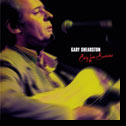
'Only Love Survives'
Gary has been featured on ABC's 'Australian Story'
" ... a perfectionist and an original..."
(The Sun, London)
"... genuinely spellbound ... a marvellous voice..."
(Melody Maker, London)
"... a national treasure ..."
(Australia All Over, ABC Radio)
"... occupies a singular place in Australian music history."
(Keith Glass, The Australian)
|










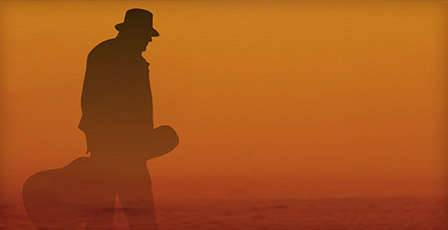
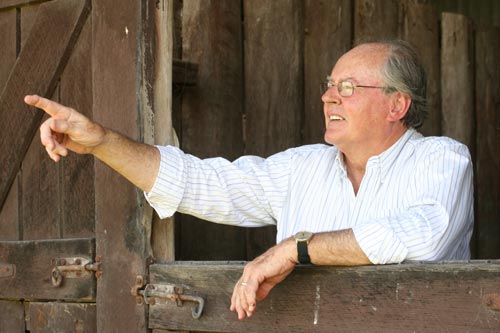
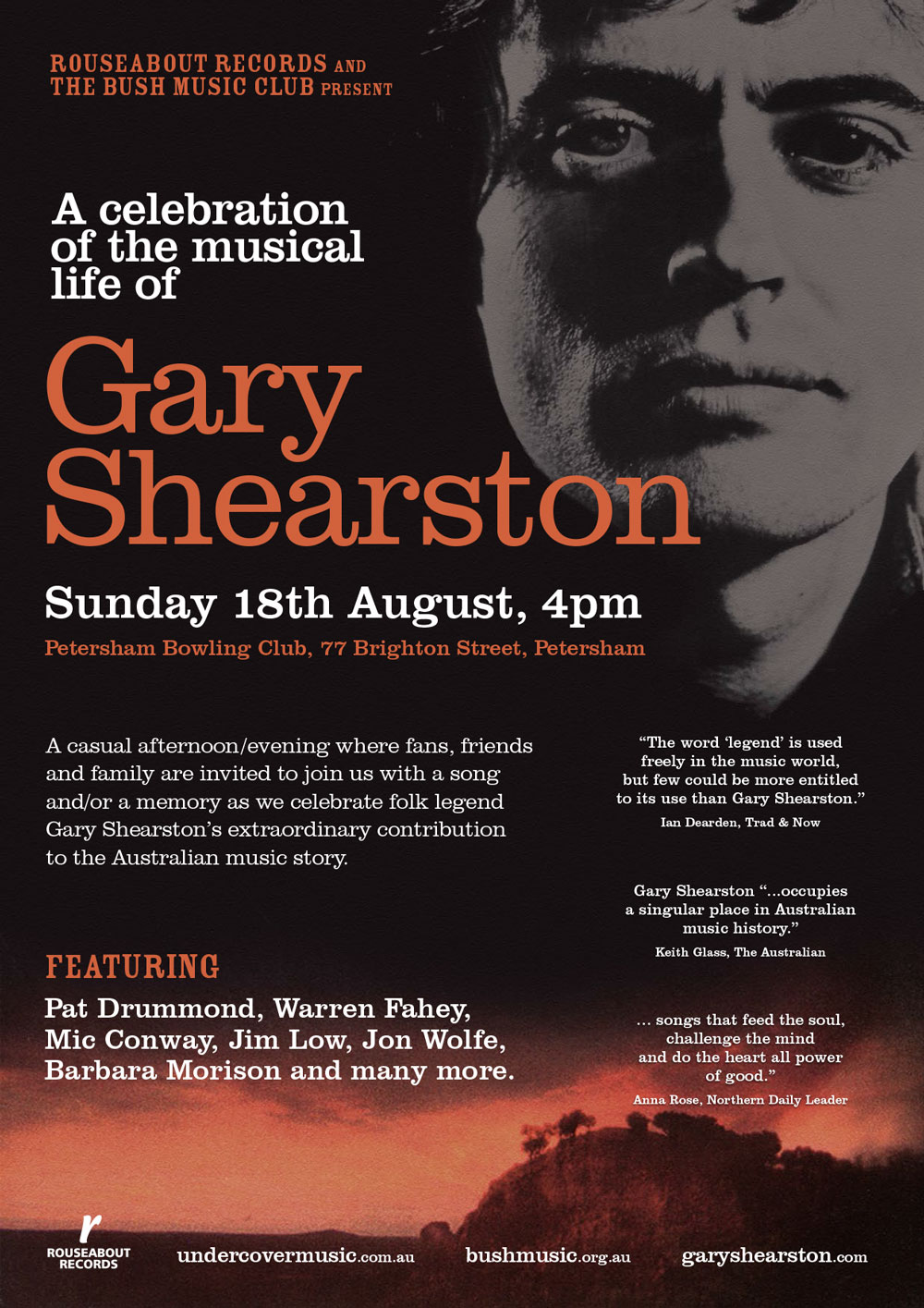 Songwriter and folksinger Gary Shearston would have enjoyed his farewell at the Petersham Bowling Club on Sunday 18th August. The legendary Australian voice died on 1st July and his musical mates, and there were many, came to pay tribute and send him off with song.